- The Playbook
- Posts
- Personalization is not a Fix
Personalization is not a Fix
👎 It didn't fix your conversion rate. it was never going to, and more!

Welcome to The Playbook—your backstage pass to marketing mastery. We don’t just share tips; we hand you strategies to dominate the field. Get ready and make bold moves in the ever-evolving marketing game. 🎯
👎Personalization Didn't Fix Your Conversion Rate. It Was Never Going To.
Personalization optimizes for individuals already likely to convert while masking the structural reasons entire customer types disappear before they ever get there.
The agency sold it because it's an easy upsell. You bought it because it looked like progress in a Monday review. It isn't. Here's what actually moves the number.
Name the conflict of interest your agency has never mentioned.
Personalization creates ongoing dependency, more data, more segments, more flows to manage, more retainer hours. Journey diagnosis does the opposite. It identifies the structural fix, you implement it once, and the problem goes away.
That's why agencies don't lead with it. Understanding this reframes every "personalization strategy" recommendation you've ever received as a question: is this solving the journey or extending the engagement?
Use personalization data to find what it's hiding.
High personalization lift on a specific segment isn't a win, it's a diagnostic signal. If a personalized flow is dramatically outperforming for one customer type, it means the default journey was failing that type badly enough that any targeted intervention produced outsized results.
The win isn't the personalization. It's the broken journey it accidentally revealed. Pull your highest-performing personalized segments and ask: what was the default experience doing so wrong that this fix moved the needle this much?
Identify the segments converting despite the journey, not because of it.
Your personalization dashboard shows you who converted. It never shows you who converted despite friction your brand created, people determined enough to buy through a broken experience.
Those customers are masking the real conversion rate for their segment. Find them by cross-referencing high-intent traffic sources against conversion rates that should be higher given the intent level.
The gap between expected conversion and actual conversion, by customer type, is where your journey is structurally failing. Personalization never surfaces this. It only optimizes within the failure.
Run a journey audit by customer type before your next personalization build.
Before any new flow gets built, map the current journey for your three highest-volume customer types from entry point to purchase. Count the number of moments each type hits an experience not built for them, wrong messaging, wrong proof point, wrong pacing.
That count is your personalization debt. Paying it down with journey fixes produces compounding returns. Layering more personalization on top of it produces diminishing ones.
Personalization as a layer on top of a working journey compounds results. Personalization as a substitute for a working journey is the most expensive way to avoid the real problem.
One fixes the 20% already heading toward yes. Journey architecture fixes the 80% who weren't.
Parntership with Delve
Your copilot for compliance is here
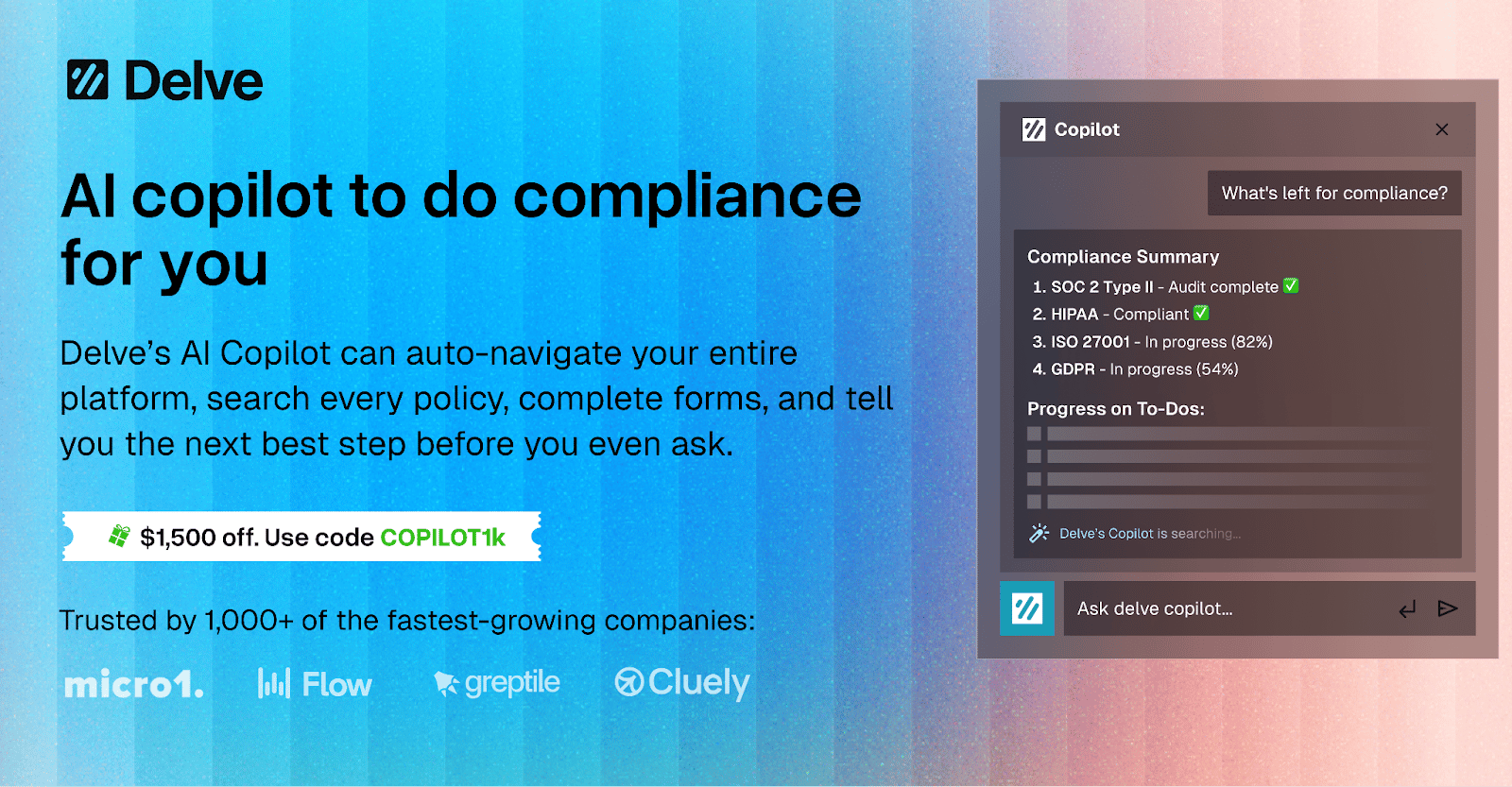
Ever been tired, stuck, and miserably documenting something that feels like AI was born to do? AI finally delivered.
Delve's AI copilot understands your entire tech stack and tells you exactly what to do next. Just ask it "What's my next step? Take me there" and watch Copilot read your screen and start doing tasks for you.
Congrats, you've found the light at the end of the tunnel. Join Wisprflow, 11x, Bland, and more in the future of compliance with Delve.
🚀Quick Hits
🎬 Meta's Edits app adds freeze frame, AI-powered personalized sound effects based on video content, and a voiceover teleprompter for narration, continuing its rapid feature expansion since launching last April.
🔎 Google Search Console now natively separates branded vs. non-branded search traffic for all eligible sites, eliminating the need for manual regex filters and making it easier to measure brand demand versus discovery traffic.
🛒 93% of consumers continue shopping with brands that offer personalized experiences. Top purchase triggers include price-drop alerts (85%), back-in-stock notifications (81%), and relevant product recommendations (73%), while 80% ignore irrelevant messages.
🔗 Amazon opened its Shop Direct feature to third-party product feeds, letting brands auto-sync catalogs, pricing, and inventory in real time, displaying their products in Amazon search results with links to purchase directly from brand websites.
💪Tweet Of The Day
🪩Events
🔥 Adweek's AI Agency of the Year Is Sending Their Creative Strategy Lead to Teach This.
Starts March 17 | 8 Weeks Live | Free
Ad fatigue outpaces every team without a production system. Motion's Creative Strategy Bootcamp teaches hooks, AI creative workflows, testing architecture, and real ad production under live coaching. Cate Wright runs creative strategy at Monks, Adweek's AI Agency of the Year. Jade Heritage leads growth creative at Calm, a $2B app with 130M downloads.
✅ Reserve Your Free Spot Before March 17
Can't attend every session live? Register anyway, you'll get the recordings within 24hours.
Advertise with Us
70% of email clicks are bots but not with The Playbook. Reach real human buyers with verified clicks and only pay for actual engagement.
You’ve got the plan—now it’s time to execute. Thanks for being part of The Playbook squad! Let us know if this was helpful so we can keep the play strong with all the right ploys.