- The Playbook
- Posts
- SEO is about two algos now
SEO is about two algos now
🥲You're writing for one algorithm. There are two now, and more!

Welcome to The Playbook—your backstage pass to marketing mastery. We don’t just share tips; we hand you strategies to dominate the field. Get ready and make bold moves in the ever-evolving marketing game. 🎯
🥲You're writing for one algorithm. There are two now.
Content teams are optimizing for a game that's only half the board.
Rankings. Impressions. Organic traffic. The metrics haven't changed so the assumption is that the strategy shouldn't either. Write for search intent, hit the right keywords, build authority signals. Job done.
Except there's a second algorithm making content decisions now, and it doesn't work anything like the first one.
Why the same content can't serve both
Search algorithms rank pages against each other based on relevance, authority, and topical coverage built over time.
AI retrieval doesn't rank. It extracts. It looks for content that directly answers a question, clean entity signals, an unambiguous structure, and language that maps precisely to how the question was asked. Not the best page on a topic. The most directly retrievable answer to a specific query.
The content decision that wins a ranking often loses a citation. A long-form pillar page signals authority across a subject and ranks well. That same page gets skipped by AI retrieval because the specific answer is buried inside 3,000 words of context.
Two algorithms. Two definitions of useful content. One strategy trying to serve both and doing neither fully.
What changes when you write for retrieval
Specificity over coverage. Search rewards comprehensive pages. AI rewards specific answers. A page answering one precise question with direct language retrieves better than a page covering everything about the same topic.
Entity clarity over keyword density. AI builds answers around named entities, brands, concepts, processes, not keyword frequency. Content that clearly names and defines its entities gets retrieved. Content optimized purely for keyword placement gets ranked but skipped.
Direct answerability over narrative flow. Long editorial introductions work for human readers. AI crawlers extract the answer and leave. If the directly answerable content isn't near the top and clearly structured, retrieval fails regardless of overall quality.
Grounding terms over search keywords. The language AI uses to pull content differs from what humans type into Google. Semrush One's Prompt Research tool surfaces the exact grounding terms AI uses when generating answers in your category, distinct from traditional keyword data. You can try it for free for 7 days.
How to audit for retrieval gaps
Take your five highest-traffic pages and ask:
Is the core answer extractable in the first 150 words?
Are key entities named and defined clearly?
Does the language map to how AI generates answers in your category?
If any answer is no, the page ranks. AI skips it. Every AI-generated answer in your category that doesn't cite you is sending traffic somewhere else.
Two algorithms are deciding your content's visibility. Optimizing for one is only half a strategy.
Partnership with Modash
You're Automating the Wrong Things
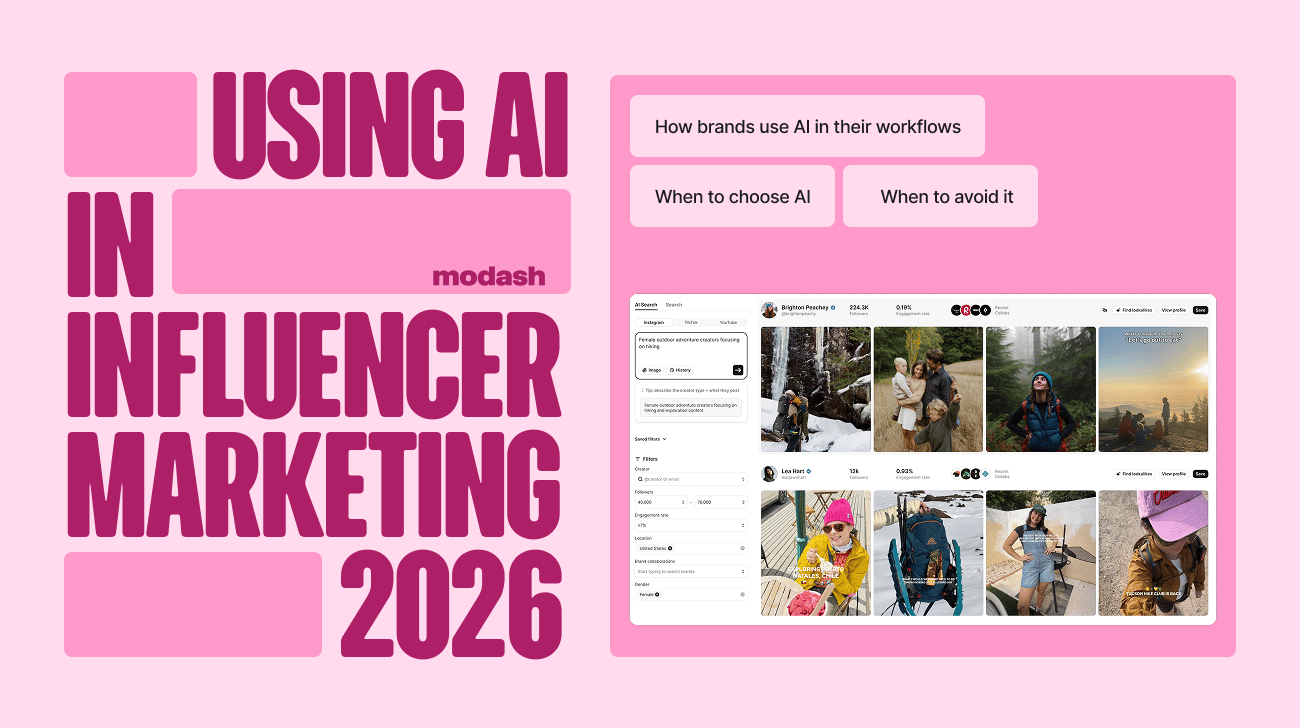
81.9% of influencer marketers now use AI daily. Most are automating the wrong things, blasting robotic outreach, losing creator trust, and wondering why response rates tanked.
Modash surveyed 50+ professionals to map exactly where AI earns its keep and where handing it over costs you more than the time you saved.
The guide is free, non-gated, and built by people who actually run these programs. Read the full guide here.
But a strategy without execution is just reading. Modash connects everything your program actually runs on:
✅ Search 350M+ creators across Instagram, TikTok, and YouTube, shortlist real partners in minutes
✅ Track clicks, revenue, ROAS, and EMV from post to purchase through Shopify
✅ Manage outreach, campaigns, and payouts across 180+ countries in one workflow
1,900+ brands, including Victoria's Secret and Montblanc, already run their programs here instead of juggling five different tools.
🚀Quick Hits
📬 Dukier grew revenue 525% on Omnisend, and more than half of it came from automations they set once and never managed again. That is what 150,000 brands chose it for, and it is what your current platform is either doing or it is not. Try Omnisend free and be up and running in 30 minutes.
💰 Meta's Creator Fast Track pays established Instagram, TikTok, and YouTube creators up to $3,000 monthly to repost 15 Reels on Facebook, with no exclusivity required.
🤖 YouTube's new "Reimagine" feature lets users transform a single Shorts frame into an AI-generated 8-second clip using Google's Veo model, without requiring any original footage or creative input.
📉 Chartbeat data shows small publishers lost 60% of search referral traffic over two years, with AI referrals rising 200% but still accounting for under 1% of total traffic.
🧹 Google retiredmultiple legacy ad format policies in Google Ads on March 17th, removing outdated requirements for form, image, responsive, and text ads as it shifts toward automated campaign types.
💪Tweet Of The Day
Advertise with Us
70% of email clicks are bots but not with The Playbook. Reach real human buyers with verified clicks and only pay for actual engagement.
You’ve got the plan—now it’s time to execute. Thanks for being part of The Playbook squad! Let us know if this was helpful so we can keep the play strong with all the right ploys.